


 Sign in


 Profile
 Signout

FREE PDF Download
-
1Social Science (Term-2) 2022 Set - 15


-
2Social Science (Term-2) 2022 Set - 14
-
3Social Science (Term-2) 2022 Set - 13
-
4Social Science (Term-2) 2022 Set - 12
-
5Social Science (Term-2) 2022 Set - 11
-
6Social Science (Term-2) 2022 Set - 10
-
7Social Science (Term-2) 2022 Set - 9
-
8Social Science (Term-2) 2022 Set - 8
-
9Social Science (Term-2) 2022 Set - 7
-
10Social Science (Term-2) 2022 Set - 6
-
11Social Science (Term-2) 2022 Set - 5
-
12Social Science (Term-2) 2022 Set - 4
-
13Social Science (Term-2) 2022 Set - 3
-
14Social Science (Term-2) 2022 Set - 2
-
15Social Science (Term-2) 2022 Set - 1
-
16Social Science - (Term-1) - 2022 with Marking Scheme
-
17Social Science (Term-1) 2021-22 Set - 1
-
18Social Science (Term-1) 2021-22 Set - 2
-
19Social Science (Term-1) 2021-22 Set - 3
-
20Social Science (Term-1) 2021-22 Set - 4
-
21Social Science (Term-1) 2021-22 Set - 5
-
22Social Science (Term-1) 2021-22 Set - 6
-
23Social Science (Term-1) 2021-22 Set - 7
-
24Social Science (Term-1) 2021-22 Set - 8
-
25Social Science (Term-1) 2021-22 Set - 9
-
26Social Science (Term-1) 2021-22 Set - 10
-
27Social Science (Term-1) 2021-22 Set - 11
-
28Social Science (Term-1) 2021-22 Set - 12
-
29Social Science (Term-1) 2021-22 Set - 13
-
30Social Science (Term-1) 2021-22 Set - 14
-
31Social Science (Term-1) 2021-22 Set - 15
-
32Social Science (Term-1) 2021-22 Set - 16
-
33Social Science (Term-1) 2021-22 Set - 17
-
34Social Science (Term-1) 2021-22 Set - 18
-
35Social Science (Term-1) 2021-22 Set - 19
-
36Social Science (Term-1) 2021-22 Set - 20
-
37Social Science - (Term-1) - 2022 with Marking Scheme
-
38Social Studies 2021 Set - 9
-
39Social Studies 2021 Set - 8
-
40Social Science - CBSE Model Question Papers 2021
-
41Social Studies 2021 Set - 1
-
42Social Studies 2021 Set - 2
-
43Social Studies 2021 Set - 3
-
44Social Studies 2021 Set - 4
-
45Social Studies 2021 Set - 5
-
46Social Studies 2021 Set - 6
-
47Social Studies 2021 Set - 7


Become familiar with the exam-level questions using the CBSE Class 10 Social Science sample paper 2026-27, available in PDF. Every year before conducting the final board examination, the Central Board of Secondary Education releases the official sample papers. These papers reflect the actual paper structure — from question types to mark distribution, everything is similar. In fact, solving the sample paper within the official 3-hour time limit helps you experience the real exam pressure. It also reveals your weaker areas in learning and exam skills.
You don’t need to wait to cover the whole syllabus, but 60–70% is enough to start. As you solve the CBSE Class 10 Sample Paper, identify important questions and your mistakes to improve on them before the final paper. Direct links to download the Class 10 CBSE Social Science sample paper are available on this page.
Set-Wise Social Science Class 10 CBSE Sample Paper in PDF
There is more than one set of CBSE Class 10 Social Science SQPs, so attempt any one. Next, compare your answers using the expert-created solutions, and use that performance analysis to strategise your next preparation phase. Each sample paper, as well as the CBSE Class 10 Social Science previous year paper, is an opportunity to diagnose your current preparation level and to understand areas that need more attention.
-
Social Science - CBSE Model Question Papers - 2027 with Marking Scheme
-
Social Science - CBSE Model Question Papers - 2026 with Marking Scheme
-
Social Science - CBSE Model Question Papers - 2025 with Marking Scheme
Ideally, 5–10 unique sets of sample papers are recommended to practise during the preparation phase. Ensure you attempt and improve on weaknesses before moving to another set. Browse the links mentioned below to get access to multiple sets of the Social Science Class 10 CBSE sample paper.
CBSE Class 10 Social Science Exam Pattern and Marking Scheme 2026-27
A clear understanding of the structure of a Social Science question paper can help you develop a clever preparation strategy. Knowledge of the latest exam pattern and marking scheme keeps you ahead of many students who don’t find it important during preparation.
When it comes to the Class 10 SST paper, it carries a total of 100 marks, which is further divided into two parts. Out of 100 marks, 80 are reserved for the theory paper, for which you will practise sample papers, and the remaining 20 marks are for the internal assessment your school will provide. The theory paper is conducted for a total of 3 hours and covers History, Geography, Political Science (Civics), and Economics.
|
CBSE Class 10 Social Science Marks Distribution 2026-27 |
|
|
Area |
Marks |
|
Theory Examination |
80 |
|
Internal Assessment |
20 |
|
Total |
100 |
Class 10 Social Science Paper Structure
The sample paper Class 10 CBSE 2026-27 Social Science is structured in this manner: a variety of questions are spread across 6 sections for 80 marks. Each question and its section have their respective fixed marks. Section ‘F’, which is for map-based questions, is for 5 marks and is considered a scoring section. For the detailed sample question paper structure, go through the table below.
|
Section |
Question Type |
Marks |
|
Section A |
MCQs / Objective-Type Questions |
20 |
|
Section B |
Very Short Answer Questions |
8 |
|
Section C |
Short Answer Questions |
15 |
|
Section D |
Long Answer Questions |
20 |
|
Section E |
Case-Based / Source-Based Questions |
12 |
|
Section F |
Map-Based Question |
5 |
|
Total |
80 Marks |
Note: Internal choices are available in most sections except for objective questions.
Subject-Wise Marks Distribution in Class 10 Social Science Sample Papers 2026-27
In this class, Social Science comprises four subjects: History, Geography, Political Science (Civics), and Economics. Since the theory paper is for 80 marks only, each subject has a weightage of 20 marks, including map work. You need to pay equal attention to each subject.
|
Subject |
Marks |
|
History (Including Map Work) |
20 |
|
Geography (Including Map Work) |
20 |
|
Political Science (Civics) |
20 |
|
Economics |
20 |
|
Total Theory |
80 Marks |
CBSE Class 10 SST Internal Assessment (20 Marks)
The school has the authority to provide up to 20 marks to each Class 10th student in Social Science. Those 20 marks are awarded based on project work, portfolio, and periodic tests. Each component has assigned marks; read them in the table below.
|
Part |
Marks |
|
Periodic Tests / Multiple Assessments |
10 |
|
Portfolio |
5 |
|
Subject Enrichment Activity / Project Work |
5 |
|
Total Internal Assessment |
20 Marks |
What Are Competency-Based Questions in Social Science Sample Papers?
Competency-based questions are developed to test a student’s ability to understand, analyse, interpret, and apply concepts rather than recalling facts from the textbook. In Social Science, you will need to use your knowledge of History, Geography, Political Science, and Economics to explain situations, interpret sources, analyse data, or provide conclusions. Here is an example of SST competency-based questions:
Example of Case-Based Question (Economics)
India has witnessed rapid growth in digital payment systems over the last few years. Many people now use mobile apps and online banking for transactions instead of cash.
-
Question: How can the increasing use of digital payments contribute to the formalisation of the economy?
- Answer: Digital payments create recorded transactions, improve transparency, reduce tax evasion, and help the government monitor economic activities more effectively. This encourages more businesses and individuals to become part of the formal economy.
To answer such questions in the CBSE sample paper Social Science Class 10, you will need to have a strong command of the concepts explained in the NCERT Class 10 Social Science textbooks. This is because competency-based questions focus on one thing: "How can this concept be applied?"
Instructions Mentioned in the CBSE Class 10 Social Science SQP
There are 10 general instructions that you get in every set of CBSE sample paper Social Science Class 10. All of these are mentioned in the image below.
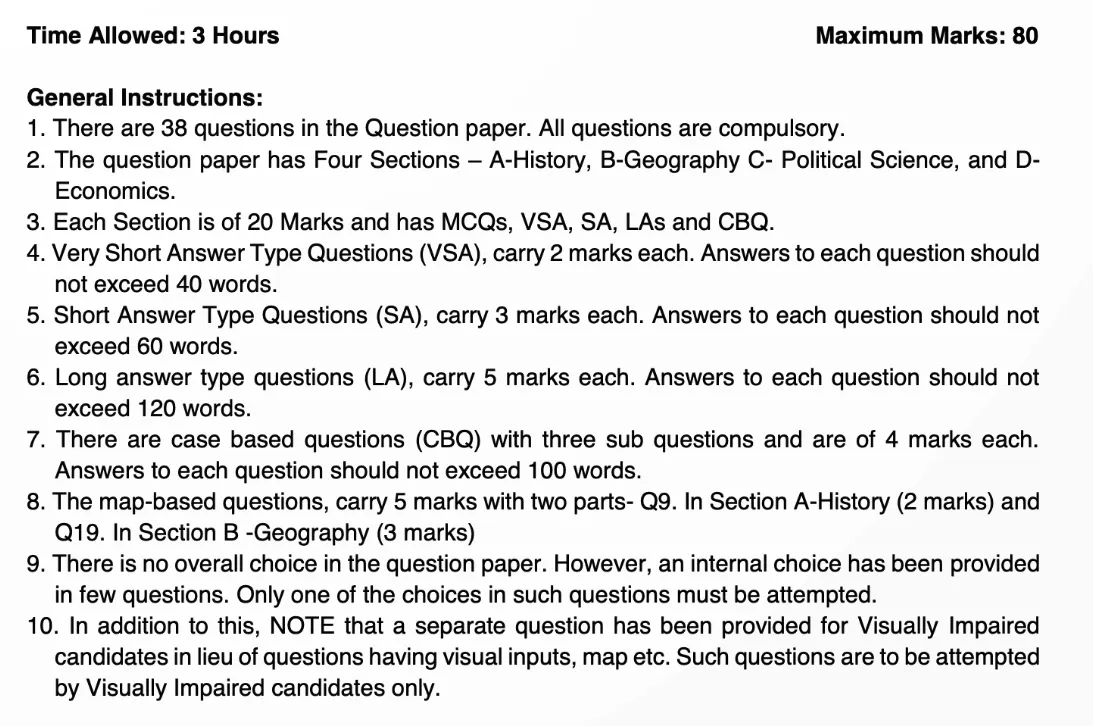
CBSE Class 10 Latest Sample Paper 2027 Social Science Download
To download the CBSE Class 10 Social Science sample paper with solution, follow this step-by-step process:
- Visit the Selfstudys.com website on your smartphone or PC.
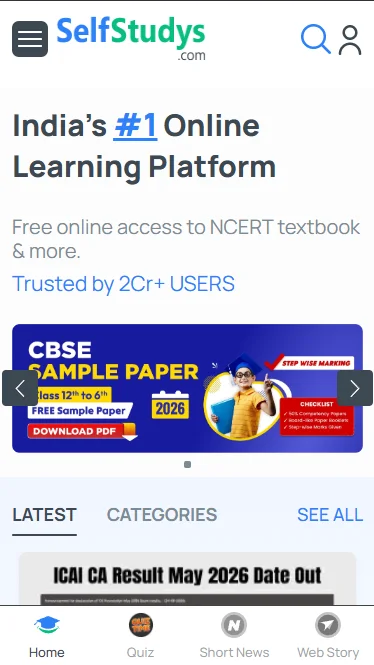
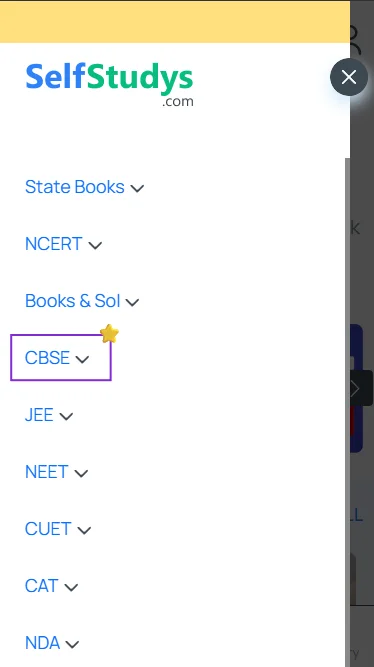
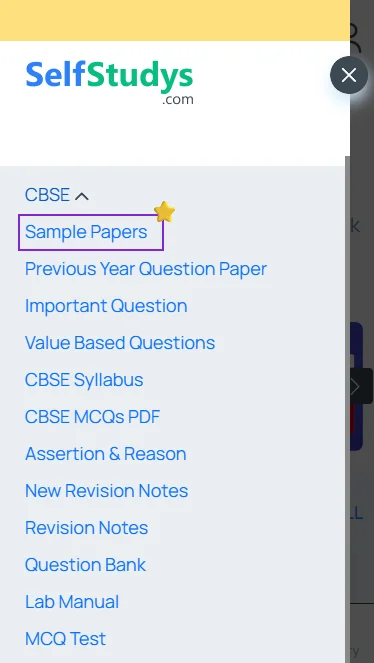
- Go to the menu section and navigate to ‘CBSE’, then ‘ CBSE Sample Papers’.
- Now, select your class by clicking on the ‘10th’ button.

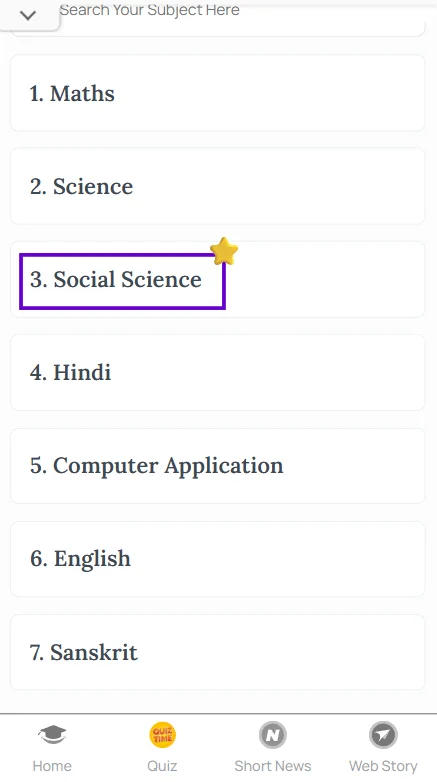
- A subject-wise CBSE Class 10 sample papers list will appear; locate and click on ‘Social Science’.
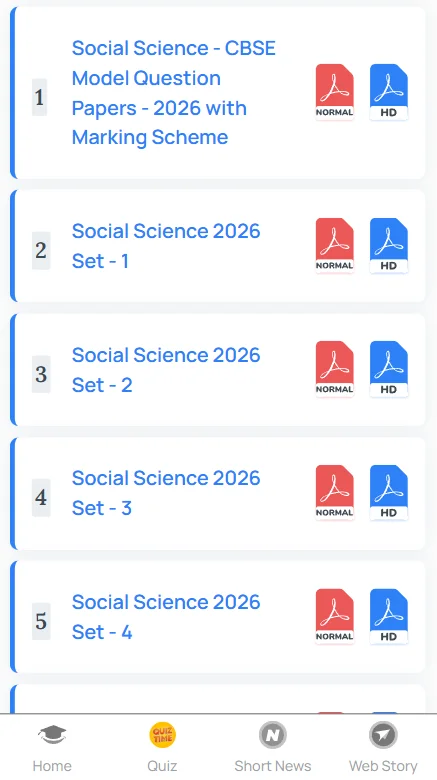
- Now, you get the set-wise CBSE Class 10 sample paper 2027 Social Science PDF.
- Pick any CBSE Class 10 latest sample paper 2027 Social Science download set to view the PDF in an interactive viewer. If you want to save it for offline study sessions, click on the ‘Download PDF’ button.
How to Prepare for the Board Exam Using Class 10 CBSE Social Science Sample Paper
CBSE Class 10 Social Science sample paper 2026-27 is one of the best study materials for board exam preparation. Along with helping you understand the latest exam pattern, consistent practice helps you improve answer-writing skills and lets you know the areas that need more revision. However, solving only sample papers is not enough. Every candidate should use these papers along with the CBSE Class 10 Social Science Important Questions strategically to get the maximum benefit.
1. Complete the Class 10 SST Syllabus Before an SQP Attempt
Before attempting a Class 10 CBSE Social Science sample paper, you should have enough knowledge of all the chapters mentioned in the Class 10 Social Science Syllabus. Even if you’ve completed 60–70% of the syllabus, it could work in the early preparation stage. However, before starting your question practice session, make sure you revise all four subjects. Doing this will help you test your actual preparation level instead of guessing it.
2. Solve the CBSE Sample Paper Class 10 Social Science Like a Real Board Exam
You need to create exam-like conditions when you are solving the sample papers. Why? Because practising full-length CBSE Class 10 Social Science SQPs within the official 3-hour time limit trains you. It helps you learn whether your current preparation is enough to handle all 38 questions. It also creates an environment where you can’t access CBSE NCERT Class 10 Social Science Revision Notes or textbooks for help when you don’t know the answers to the questions.
This way, you also experience the actual exam difficulty level and are prepared to sit for a 3-hour duration without a break. Following real exam conditions improves your time management skills and exam confidence, which random practice can’t provide.
3. Focus on Source-Based & Competency-Based Questions
Both source-based and competency-based questions are an important part of the Social Science Class 10 CBSE sample paper. Gradually, CBSE is increasing the number of such questions year on year, so you need to master these question types. When you are practising, ensure you read the questions properly, find important keywords, and identify the chapters and concepts that are used to frame these question types. Especially for competency-based questions, ensure you spend extra time understanding why an answer is correct rather than memorising it.
4. Practise Map-Based Questions Separately
Map questions in this subject are often considered one of the easiest sections to score marks. All you need to do during preparation is to focus on: important historical centres, mineral-producing areas, major industries, rivers, dams, ports, and agricultural regions. Spend a few extra minutes on map-based questions in the sample paper Class 10 CBSE 2026-27 Social Science during every revision session.
5. Follow the Analyse-Revise-Retest Method
One attempt is not enough. You should use one of the most effective methods to practise SQPs: solve a CBSE sample paper Class 10 Social Science first, analyse mistakes, revise weak chapters, practise similar questions from other sources, and reattempt the same or another sample paper. Following this cycle helps improve your accuracy, speed, and confidence with each attempt. Ensure you are not judging your preparation based on how many sample papers you have solved, but on how much you learn from each paper.
Most Repetitive and Important Topics to Cover in CBSE Class 10 Social Science
From the SST marks distribution, we know that each subject is equally important because each has a 20-mark weightage. However, some topics deserve more attention either because questions from them are frequently asked or due to their conceptual importance and relevance to competency-based questions. This section covers those important topics you should master before solving the CBSE sample paper Social Science Class 10.
The table below contains high-priority topics across all subjects in Class 10 Social Science. If you have a very short time, ensure you thoroughly prepare for each of these topics.
|
Subject |
High-Priority Topics |
|
History |
Nationalism in India, Nationalism in Europe |
|
Geography |
Agriculture, Minerals & Energy Resources, Manufacturing Industries |
|
Civics |
Federalism, Political Parties, Outcomes of Democracy |
|
Economics |
Money and Credit, Globalisation, Sectors of the Indian Economy |
Find a detailed breakdown of the subject-wise topics below, frequently asked in Class 10 Social Science:
CBSE Class 10 Social Science History (Important Topics)
You must focus on source-based questions and cause-and-effect analysis for Class 10 History questions.
|
Topics |
Important Areas to Cover |
|
The Rise of Nationalism in Europe |
|
|
Nationalism in India |
|
|
The Making of a Global World |
|
|
Print Culture and the Modern World |
|
CBSE Class 10 Social Science Geography (Important Topics)
The most important skills for Geography are map-based questions and data interpretation.
|
Topic |
Important Areas to Cover |
|
Resources and Development |
Types of resources; Resource planning; Sustainable development |
|
Agriculture |
Major crops and growing conditions; Types of farming; Contribution of agriculture to the economy |
|
Minerals and Energy Resources |
Iron ore, coal, petroleum, natural gas; Conventional and non-conventional energy sources |
|
Manufacturing Industries |
Importance of industries; Industrial pollution; Location factors |
|
Lifelines of the National Economy |
Transport systems; International trade; Globalisation and communication networks |
|
Map Work |
Major crops; Minerals; Industries; Ports; National highways |
CBSE Class 10 Social Science Political Science (Important Topics)
For Political Science (Civics), master Application-based and case-study questions.
|
Chapter |
Important Areas to Cover |
|
Power Sharing |
Belgium and Sri Lanka case studies: Forms of power sharing |
|
Federalism |
Features of the federal government; Centre-State relations; Decentralisation |
|
Gender, Religion, and Caste |
Social diversity: Challenges to democracy |
|
Political Parties |
Functions of political parties; National and regional parties; Party systems |
|
Outcomes of Democracy |
Accountability; Transparency; Democratic rights |
CBSE Class 10 Social Science Economics (Important Topics)
The important skills for Economics are real-life applications and data-based questions.
|
Topic |
Important Areas to Cover |
|
Development |
Different development goals, Human Development Index, Sustainable development |
|
Sectors of the Indian Economy |
Primary, secondary, and tertiary sectors; Organised and unorganised sectors |
|
Money and Credit |
Functions of money; Formal and informal credit; Role of banks |
|
Globalisation and the Indian Economy |
Multinational corporations; Impact of globalisation; Liberalisation |
|
Consumer Rights |
Consumer awareness; Consumer protection mechanisms; Rights of consumers |
Conclusion
The CBSE Class 10 Social Science sample paper with solution is an important resource to prepare for the board examination in a structured and strategic manner. Beyond helping you understand the latest exam pattern and marking scheme, these sample papers provide practice in answering competency-based, source-based, and map-based questions under real exam conditions. Each attempt helps you identify weak areas, improve time management, and strengthen your answer-writing skills across History, Geography, Civics, and Economics.
To get the maximum benefit, solve the CBSE Class 10 sample paper 2027 Social Science PDF regularly, analyse your mistakes using the solutions, revise the related topics, and track your progress over time. Doing these things will build confidence and improve your accuracy for the board examination. Download the PDFs and start your practice session early.
Solving at least 5–10 full-length sets of the CBSE sample paper Social Science Class 10 is strongly recommended by teachers and toppers. More than counting the number of sample papers you have solved, it is important to analyse mistakes, revise weak chapters, and improve your answer-writing method after each attempt.
No. Practice with the sample paper Class 10 CBSE 2026-27 Social Science is an important part of the overall exam preparation, but it is not a replacement for NCERT books, revision notes, and textbook-based question practice. You need to develop a strong understanding of the SST concepts across subjects, do consistent revision, and then comes the question practice session.
Geography and History sections are considered more demanding because of map work, fact-based learning, source-based interpretation, and a clear understanding of multiple events and concepts. However, it also varies among students, as everyone has different strengths and interests in the subject. Eventually, focus on those sections you find most challenging.
To prepare for map-based questions, students should regularly practise locating important places, resources, industries, rivers, ports, and historical centres mentioned in the syllabus. Map questions are quite scoring, so everyone should aim to master them before the CBSE Class 10 Social Science SQPs practice sessions.
The Social Science paper includes questions from History, Geography, Political Science (Civics), and Economics. Students should prepare for all four sections thoroughly before attempting the CBSE Class 10 Social Science sample paper 2026-27.


 Home
Home
 Quiz
Quiz
 Short News
 Web Story
 Get latest Exam Updates