


 Sign in


 Profile
 Signout


FREE PDF Download
-
1Prelims


-
21. Rain water Harvesting
-
32. Exploring local artisans
-
43. Re-use plastic and other waste material
-
54. Reducing wastage of cooked food
-
65. Wastage of water due to negligence
-
76. Preventing Wastage of Electricity
-
87. Locally available medicinal plants
-
98. Farmer's woes & alternate crops
-
109. Water supply and waste - water disposal systems in the past
-
1110. Precipitation and soil erosion in the mountains
-
1211. Service providers in our village
-
1312. Our rural life
-
1413. Food availability for all
-
1514. Our people are our resource
-
1615. Modern Agricurlture and its impact on environment
-
1716. Physiographic division of India and the lifestyles of people
-
1817. Use and misuse of water bodies
-
1918. Cut on paper, cut on pollutants
-
2019. Our lifestyles and its effect on the environment
-
2120. Bond of love between humans and animals
-
2221. Our responsibilities in tourism
-
2322. Our kitchen Garden
-
2423. Quality of Water
-
2524. Save Endangered Species
-
2625. Animal breeding for increased production
-
2726. Insect sting and its home remedies
-
2827. Save Electricity
-
2928. Fluorosis
-
30Annexure

Your TS Board Class 9 Environmental Education book 2026-27 (urdu medium) is not meant to just explain the concepts. It sets the questions that you will face in slip tests, Formative Assessments, as well as SA exams. So, by learning the book in a proper way, you can avoid any surprises during the exams. On this page, you can open the book one chapter at a time and focus only on the lesson you are currently reading. You can also practise TS Board Class 9 Previous Year Question Papers to understand exam patterns and become familiar with the types of questions asked in exams. Below, you’ll find a chapter-by-chapter overview of the book. With this, you can see what’s coming and set a study plan that keeps you ahead of your class.
Download TS Board Class 9 Environmental Education Textbook Chapter-Wise
Access the TS Board Class 9 Environmental Education Textbook 2026-27 (urdu medium) chapter-wise using the links given below.
Select the chapter you are studying to access the TS Board Class 9 Textbook, review its topics, understand the concepts, and plan your preparation for slip tests, Formative Assessments, and SA exams.
Class 9 Environmental Education TS Board Book Chapters And What You Will Learn
The Class 9 Environmental Education TS Board book is divided into several chapters. The table below shows what each chapter covers so that you know what to expect in it.
|
Chapter |
What You Will Learn |
|
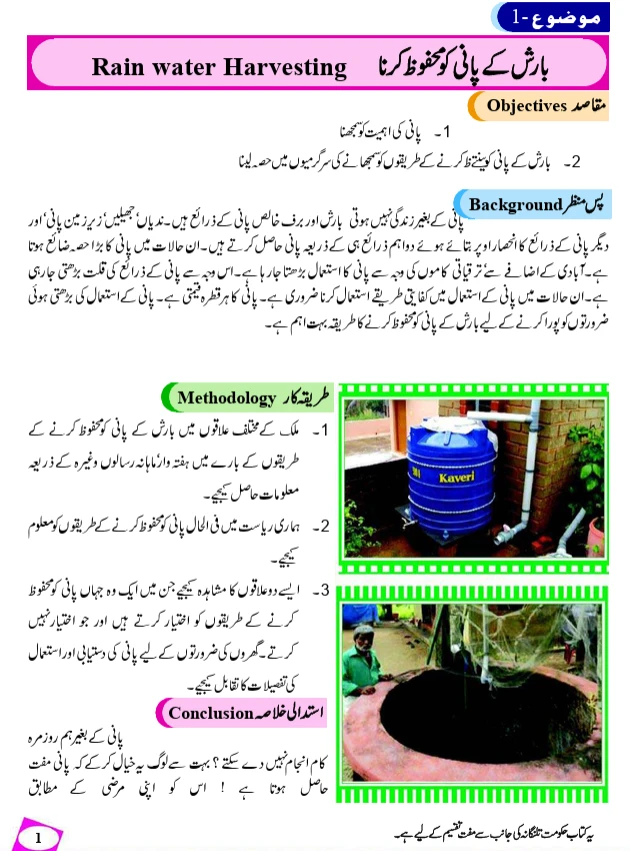
Rainwater Harvesting |
Methods of collecting and storing rainwater |
|
Exploring Local Artisans |
The crafts and skills of artisans in your area |
|
Reuse Plastic and Other Waste Material |
Ways to reuse plastic and other waste instead of throwing it away |
|
Reducing Wastage of Cooked Food |
Why food is wasted and simple ways to prevent it |
|
Wastage of Water Due to Negligence |
How water is wasted in daily life and how to save it |
|
Preventing Wastage of Electricity |
Everyday habits that waste electricity and how to avoid them |
|
Locally Available Medicinal Plants |
Medicinal plants found in your area and their uses |
|
Alternate Cropping |
Growing different crops in turns to keep the soil healthy |
|
Water Supply and Wastewater Disposal Systems in the Past |
How water supply and drainage worked in earlier times |
|
Rainfall and Soil Erosion in the Mountain Region |
How rainfall causes soil erosion on slopes and how to control it |
|
Service Providers in Our Village |
The people who provide essential services in a village |
|
Our Rural Life |
The way of life, occupations, and resources in rural areas |
|
Availability of Food for All |
Food security and how food reaches everyone |
|
Our People Are Our Resources |
How people’s skills and education are a resource for the country |
|
Modern Agriculture and Its Impact on Environment |
The effects of modern farming methods on soil, water, and health |
|
Lifestyles of People in Different Regions of India |
How climate and region shape the way people live |
|
Use and Misuse of Water Bodies |
How lakes, rivers, and ponds are used and polluted |
|
Reduce Paper Usage – Reduce Pollution |
How using less paper helps reduce pollution |
|
Our Lifestyle and Its Impact on the Environment |
How daily habits affect the environment |
|
Care for Animals |
Responsible care and protection of animals |
|
Our Responsibilities in Tourism |
How tourists can protect the places they visit |
|
Our Kitchen Garden |
Growing vegetables and herbs at home |
|
Quality of Water |
How to check water quality and keep it safe to use |
|
Protecting Endangered Species |
Why some species are endangered and how to protect them |
|
Animal Breeding for Increased Production |
How breeding methods improve livestock production |
|
Home Remedies for Insect Stings |
Simple first aid for insect stings |
|
Save Electricity |
Practical ways to reduce electricity use |
|
Fluorosis |
What fluorosis is, its causes, and how to prevent it |
How To Study A Chapter From The TS SCERT 9th Class Environmental Education Textbook
If you just read a chapter from the TS SCERT 9th Class Environmental Education textbook once, then you might not remember it for long. A better approach that you should follow is to read any chapter at least three times with a different purpose every time. Here are some points on how to do it.
-
Firstly, you should read every chapter at a normal pace and not stop to memorize anything. Your sole purpose for this reading is to understand the concept and check the connection between different sections. If there is anything that confuses you, then put a question mark on it and continue reading. There are chances that the next paragraph will make things clearer.
-
In the second reading, you should read the Telangana Board 9th Environmental Education book chapter very carefully with a pencil in hand. You need to highlight all the definitions, rules, formulas, dates, important lines, and so on, as per the subject matter of the chapter. Then, you can come back to the question marks from the last reading. You may also clear any confusion with the help of your teacher before proceeding.
-
Thirdly, you should close the book and repeat the concepts of the chapter in your own words. Once you are done, you can open the BSE Telangana Class 9 Environmental Education textbook and cross-check your notes. After this, you should try solving the exercises without any reference. If you get stuck on any question, refer to the TS Board Class 9 Solutions to understand the correct method and check your answers.
-
You can keep one sheet in your notebook for every chapter. Note down the points highlighted and errors committed by you in the exercise questions. Before any slip test or SA exam, these sheets will give you the exact revision material you need for that chapter.
-
Lastly, you must spend two minutes before every new chapter on revising the old one. There are times when chapters require knowledge of the old chapters, and this will help you retain the past lessons throughout the year.
Conclusion
On our platform, you will get all the chapters that are part of the Telangana State Board Environmental Education book for 9th in PDF format. Among all the resources that are available, this one matters the most. It has been prepared by SCERT Telangana, keeping in view the syllabus. Hence, everything mentioned in the book forms part of what you need to study. While guides, notes, and solutions help with preparation for the subject, none of them can replace the textbook. A number of the topics in the book go beyond Class 9 and are a part of Class 10 too. So, you should study it properly to prepare for the final exams in an effective manner.


 Home
 Quiz
 Short News
 Web Story
 Get latest Exam Updates