

 Sign in


 Profile
 Signout
How India's Class 12 Students Actually Use Sample Papers
What the Data Reveals About Scores, Habits, and Outcomes
A first-of-its-kind study of 1,384 CBSE Class 12 students across 28+ states, covering preparation habits, timing, subject difficulty, and the behaviours that separate high scorers from the rest.
|
SURVEY RESPONDENTS 1,384 students |
STATES REPRESENTED 28+ across India |
PRIMARY COHORT CBSE Class 12, 2024-2026 |
PUBLISHED BY SelfStudys.com Research |
AT A GLANCE
Five Key Findings
|
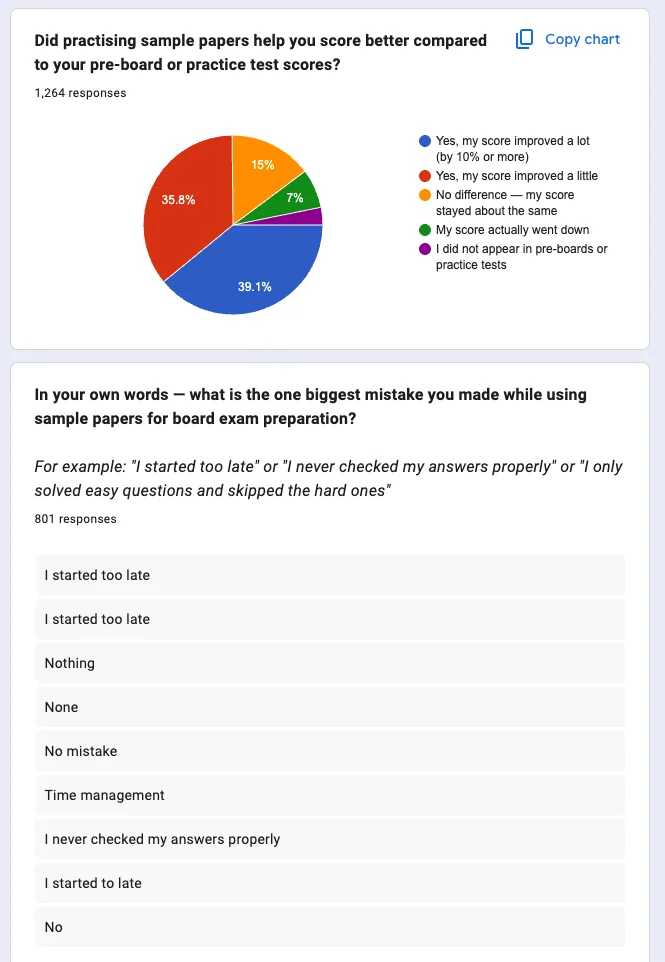
74.9% of students improved their score after practising sample papers |
38.5% started only in January or February, just weeks before exams |
2x more likely to see big score gains when practising under real exam conditions |
47.6% of 15+ paper solvers scored above 91%, vs. 20.5% who solved none |
#1 Physics named hardest by nearly 1 in 2 students to finish within 3 hours |
EXECUTIVE SUMMARY
The Sample Paper Gap: Most Students Know What to Do, But Few Do It Right
This report presents findings from a survey of 1,384 CBSE Class 12 students conducted by SelfStudys.com. The data reveals a consistent pattern: students who solve more papers, start earlier, and simulate real exam conditions score significantly higher, yet the majority of students still fall short on all three.
|
Nearly 3 in 4 students (74.9%) improved their board exam scores through sample paper practice. Yet only 1 in 3 students (36.9%) consistently practised under real exam conditions. The gap between knowing and doing is where most marks are lost. SelfStudys Research, India Class 12 Sample Paper Survey 2026 |
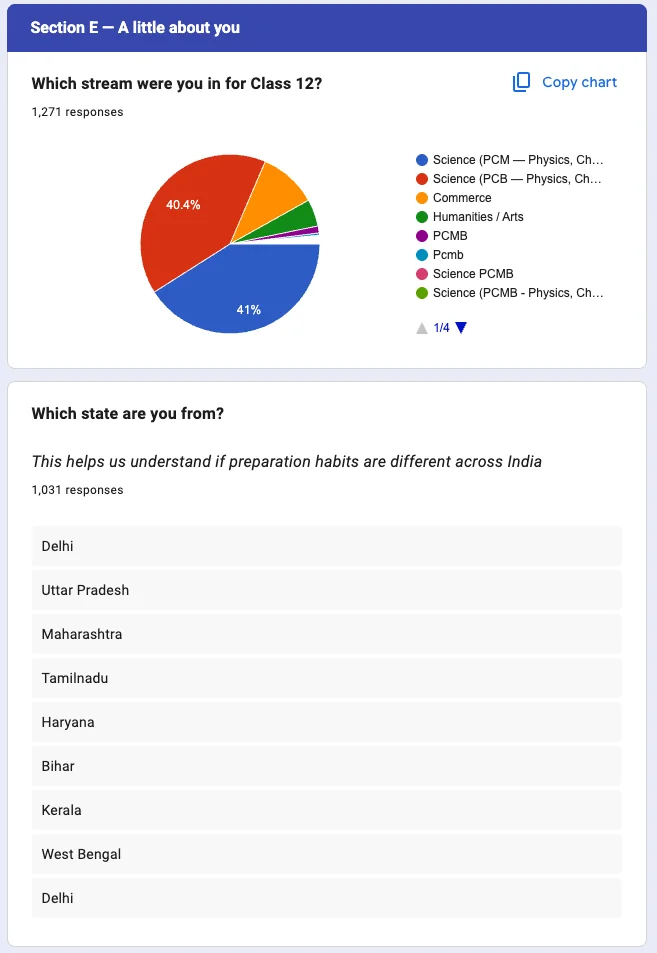
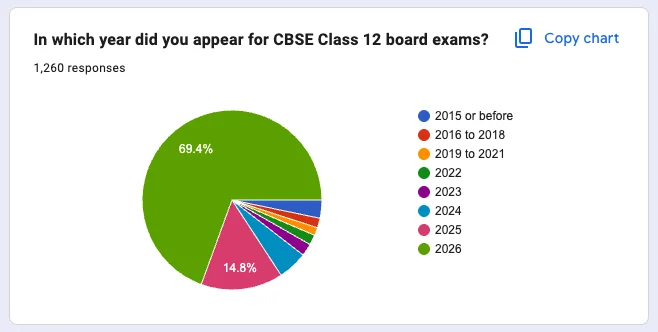
The survey draws from students across 28+ states, primarily from the 2026 board exam cohort (62.6% of respondents), supplemented by students from 2024 and 2025. Streams surveyed include Science PCM (37.2%), Science PCB (37.0%), Commerce (9.5%), and Humanities (4.5%).
Among the clearest findings: students who solved more than 15 CBSE Class 12 sample papers were 2.3 times more likely to score above 95% compared to those who solved none. Yet 6.1% of students reported solving zero papers, and 38.5% started the practice only in January or February, just weeks before the exam.
FINDING 01: PREPARATION TIMING
38.5% of Students Start Preparing with Sample Papers Less Than Two Months Before the Exam
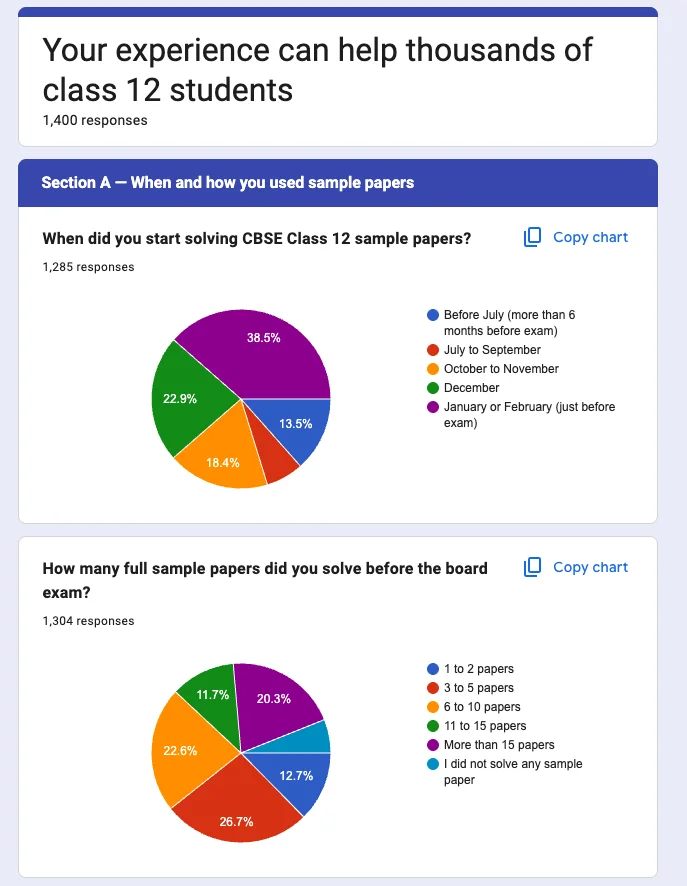
When students begin solving sample papers is one of the clearest predictors of preparation quality. The data reveals a troubling concentration of last-minute preparation across India's Class 12 cohort.
|
When did students start solving sample papers? (n=1,274) |
|||||||||||||||||||||
|
Jan-Feb (weeks before exam) |
|
|
|
|
|
|
|
|
|
|
|
|
|
|
|
|
|
|
|
|
38.5% |
|
December |
|
|
|
|
|
|
|
|
|
|
|
|
|
|
|
|
|
|
|
|
23.1% |
|
October-November |
|
|
|
|
|
|
|
|
|
|
|
|
|
|
|
|
|
|
|
|
18.4% |
|
Before July (6+ months early) |
|
|
|
|
|
|
|
|
|
|
|
|
|
|
|
|
|
|
|
|
13.3% |
|
July-September |
|
|
|
|
|
|
|
|
|
|
|
|
|
|
|
|
|
|
|
|
6.6% |
|
Over 61% of students begin sample paper practice in December or later, giving themselves 3 months or less to build exam readiness across all subjects. SelfStudys Research, 2026 |
Only 13.3% of students started before July, more than 6 months ahead of the February-March board exams. This early-starter group represents the minority who treat sample papers as a long-term preparation tool rather than a last-minute revision exercise.
Starting in January or February leaves students little time to course-correct after their first few practice attempts, identify weak subjects, or build the consistency that improves scores meaningfully.
FINDING 02: PRACTICE VOLUME
1 in 5 Students Solved More Than 15 Papers, But 1 in 16 Solved None at All
The number of full sample papers solved before the board exam varies widely. A committed minority drives impressive numbers, while a meaningful share either skips practice entirely or barely scratches the surface.
|
How many full sample papers were solved before the board exam? (n=1,293) |
|||||||||||||||||||||
|
3 to 5 papers |
|
|
|
|
|
|
|
|
|
|
|
|
|
|
|
|
|
|
|
|
26.8% |
|
6 to 10 papers |
|
|
|
|
|
|
|
|
|
|
|
|
|
|
|
|
|
|
|
|
22.7% |
|
More than 15 |
|
|
|
|
|
|
|
|
|
|
|
|
|
|
|
|
|
|
|
|
20% |
|
1 to 2 papers |
|
|
|
|
|
|
|
|
|
|
|
|
|
|
|
|
|
|
|
|
12.7% |
|
11 to 15 papers |
|
|
|
|
|
|
|
|
|
|
|
|
|
|
|
|
|
|
|
|
11.7% |
|
None (zero) |
|
|
|
|
|
|
|
|
|
|
|
|
|
|
|
|
|
|
|
|
6.1% |
|
73.5% of students solved between 3 and 15 papers, the most common preparation range |
|
18.8% solved only 1-2 papers or none at all, which is insufficient for meaningful board preparation |
A plurality of students (26.8%) solved 3 to 5 papers, enough to get familiar with the format, but likely insufficient for consistent score improvement. The most committed group (students who solved more than 15 papers) account for exactly 1 in 5 respondents (20.0%), and their score outcomes are markedly different from their peers.
FINDING 03: PRACTICE VOLUME VS. SCORE OUTCOMES
Students Who Solved 15+ Sample Papers Were More Than Twice as Likely to Score Above 95%
The relationship between practice volume and final board exam percentage is one of the most striking findings in this dataset. While correlation does not prove causation, the pattern is consistent and compelling.
|
Papers Solved |
Scored 91%+ |
Scored Above 95% |
Scored Below 70% |
|
More than 15 papers |
47.6% |
30.0% |
10.0% |
|
11 to 15 papers |
36.6% |
14.1% |
18.5% |
|
6 to 10 papers |
36.4% |
13.8% |
18.5% |
|
3 to 5 papers |
31.3% |
10.1% |
20.5% |
|
1 to 2 papers |
30.9% |
10.2% |
21.3% |
|
None (zero papers) |
20.5% |
8.2% |
28.8% |
|
Among students who solved more than 15 sample papers, 47.6% scored above 91%, compared to just 20.5% of students who solved none. That is more than double the likelihood of a top-band score. SelfStudys Research, 2026 |
The data also reveals that 30% of the 15+ paper group scored above 95%, making it the single strongest predictor variable in the entire survey. Only 10% of heavy practitioners scored below 70%, compared to 28.8% of those who solved no papers.
FINDING 04: EXAM CONDITIONS AND SCORE IMPROVEMENT
Students Who Always Practised Under Real Exam Conditions Were 2x More Likely to See Large Score Gains
How a student solves a sample paper matters as much as how many they solve. Simulating real exam conditions (timed, undistracted, in one sitting) shows a measurable effect on score improvement.
|
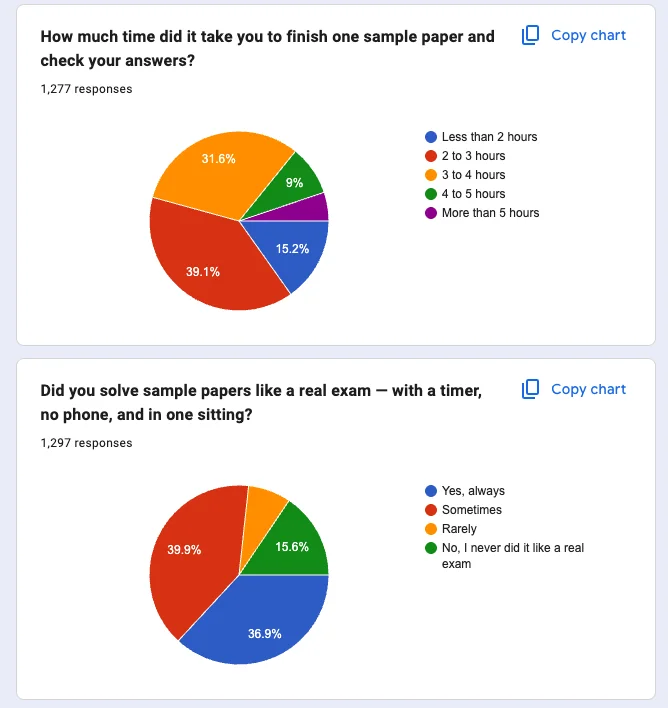
Did students solve papers like a real exam? (timer, no phone, one sitting) (n=1,286) |
|||||||||||||||||||||
|
Yes, always |
|
|
|
|
|
|
|
|
|
|
|
|
|
|
|
|
|
|
|
|
36.7% |
|
Sometimes |
|
|
|
|
|
|
|
|
|
|
|
|
|
|
|
|
|
|
|
|
40% |
|
Rarely |
|
|
|
|
|
|
|
|
|
|
|
|
|
|
|
|
|
|
|
|
7.7% |
|
No, never |
|
|
|
|
|
|
|
|
|
|
|
|
|
|
|
|
|
|
|
|
15.6% |
|
Condition |
Improved a Lot (10%+) |
Improved a Little |
No Difference |
Score Went Down |
|
Always used exam conditions |
49.8% |
27.3% |
10.6% |
6.1% |
|
Never used exam conditions |
24.9% |
26.9% |
25.4% |
7.5% |
|
Among students who never simulated real exam conditions, 25.4% reported no score improvement at all, more than twice the rate seen in those who always practised with a timer and no distractions. SelfStudys Research, 2026 |
The data makes a compelling case that the quality of sample paper practice matters as much as quantity. Students who always solved papers under real exam conditions (timer, no phone, one sitting) reported a score improvement of 10% or more at nearly double the rate (49.8%) of those who never simulated exam conditions (24.9%).
Importantly, 23% of students who never used timed conditions saw no benefit or a score decline, suggesting that casual, interrupted practice may provide significantly less value than structured repetition.
FINDING 05: SUBJECT DIFFICULTY
Physics Is the Hardest Subject to Finish Within 3 Hours, Named by Nearly 1 in 2 Students
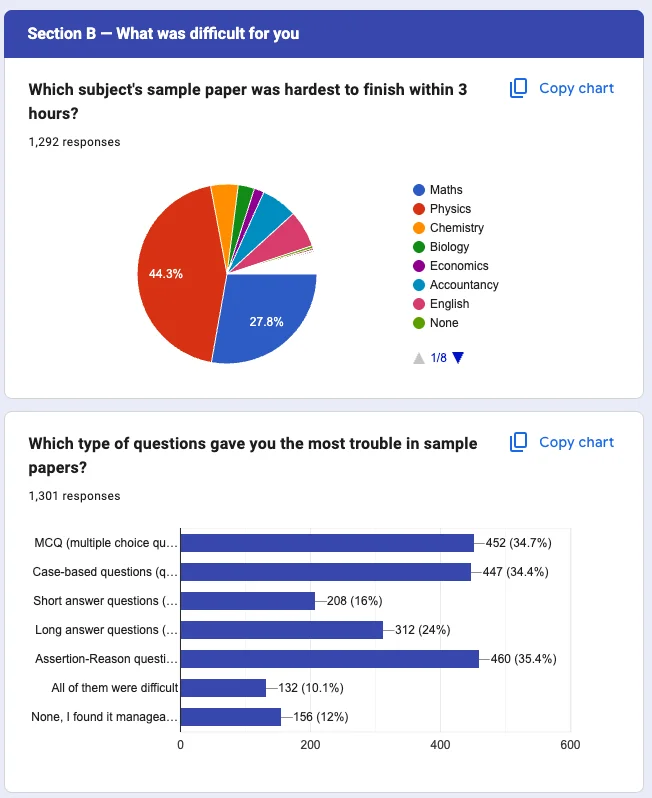
When asked which subject's sample paper was hardest to complete within the 3-hour time limit, students showed a clear consensus: CBSE Class 12 Physics Sample Paper dominates, followed at a distance by Mathematics.
|
Which subject's sample paper was hardest to complete in time? (n=1,272) |
|||||||||||||||||||||
|
Physics |
|
|
|
|
|
|
|
|
|
|
|
|
|
|
|
|
|
|
|
|
44.7% |
|
Mathematics |
|
|
|
|
|
|
|
|
|
|
|
|
|
|
|
|
|
|
|
|
28% |
|
English |
|
|
|
|
|
|
|
|
|
|
|
|
|
|
|
|
|
|
|
|
6.8% |
|
Accountancy |
|
|
|
|
|
|
|
|
|
|
|
|
|
|
|
|
|
|
|
|
6.5% |
|
Chemistry |
|
|
|
|
|
|
|
|
|
|
|
|
|
|
|
|
|
|
|
|
4.8% |
|
Biology |
|
|
|
|
|
|
|
|
|
|
|
|
|
|
|
|
|
|
|
|
2.8% |
Physics being the most time-consuming subject aligns with its question structure: long derivation-based questions, numerical problems, and diagram-heavy answers all demand more time per mark than most other subjects. The subject consistently challenges PCM students who may be strong conceptually but struggle to balance time across sections.
For Commerce students, Accountancy emerges as the time-pressure pain point, accounting for 6.5% of responses despite a smaller share of the overall respondent pool.
FINDING 06: ANSWER CHECKING HABITS
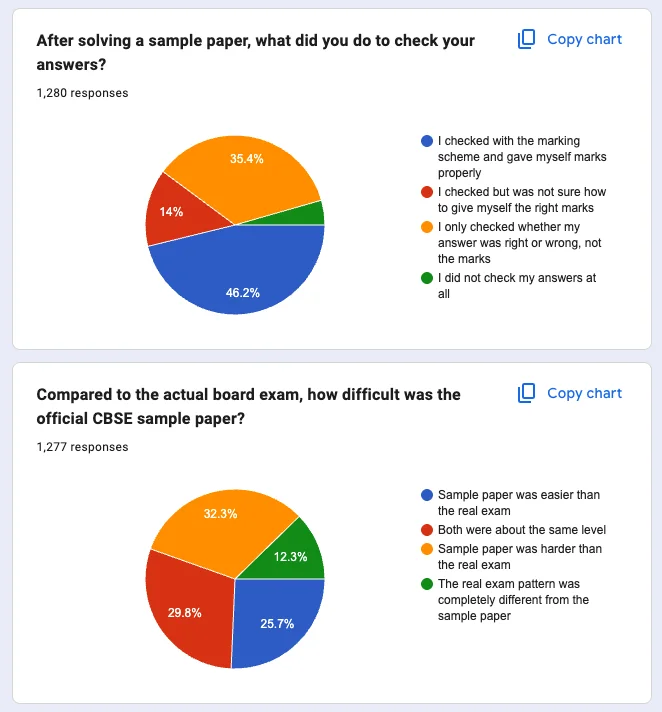
Only 46.2% of Students Check Their Answers with the Full Marking Scheme
Solving a sample paper without rigorously checking against the CBSE marking scheme is half an exercise. The data reveals that a significant share of students are not self-evaluating in a way that prepares them for how actual examiners mark papers.
|
How did students check their answers after solving? (n=1,269) |
|||||||||||||||||||||
|
Checked with marking scheme properly |
|
|
|
|
|
|
|
|
|
|
|
|
|
|
|
|
|
|
|
|
46.2% |
|
Checked right/wrong only (not marks) |
|
|
|
|
|
|
|
|
|
|
|
|
|
|
|
|
|
|
|
|
35.5% |
|
Checked but unsure how to award marks |
|
|
|
|
|
|
|
|
|
|
|
|
|
|
|
|
|
|
|
|
13.9% |
|
Did not check at all |
|
|
|
|
|
|
|
|
|
|
|
|
|
|
|
|
|
|
|
|
4.4% |
|
More than half of students (53.8%) are not checking their sample paper answers against the official CBSE marking scheme. They are practising without understanding how marks are actually awarded, which creates a false sense of preparation. SelfStudys Research, 2026 |
FINDING 07: WHERE STUDENTS GET SAMPLE PAPERS
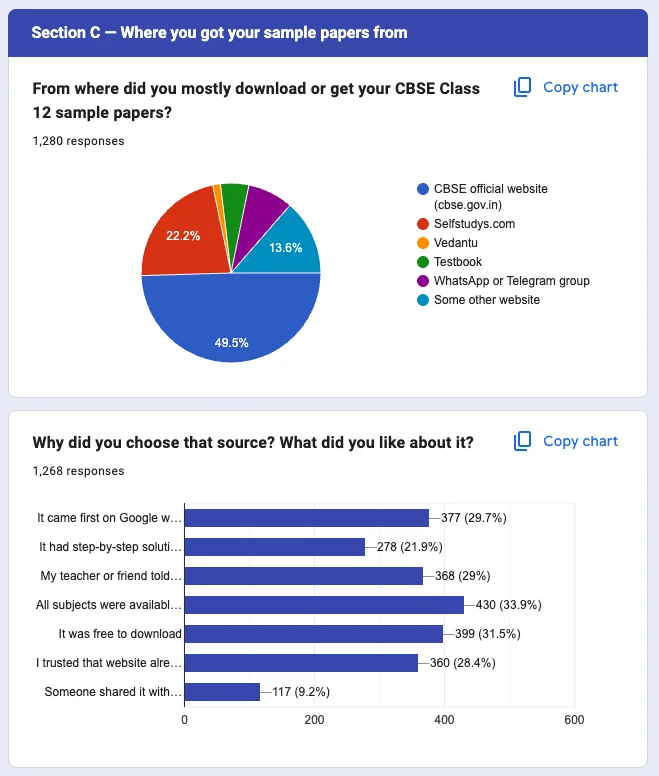
CBSE Official Site Is the Top Source, But SelfStudys.com Is the #2 Dedicated Education Platform
When it comes to downloading sample papers, students navigate a fragmented landscape: official government sources, education portals, WhatsApp groups, and coaching app platforms.
|
Primary source for CBSE Class 12 sample papers (n=1,269) |
|||||||||||||||||||||
|
CBSE official (cbse.gov.in) |
|
|
|
|
|
|
|
|
|
|
|
|
|
|
|
|
|
|
|
|
49.7% |
|
SelfStudys.com |
|
|
|
|
|
|
|
|
|
|
|
|
|
|
|
|
|
|
|
|
22.2% |
|
Other websites |
|
|
|
|
|
|
|
|
|
|
|
|
|
|
|
|
|
|
|
|
13.4% |
|
WhatsApp / Telegram group |
|
|
|
|
|
|
|
|
|
|
|
|
|
|
|
|
|
|
|
|
8.2% |
|
Testbook |
|
|
|
|
|
|
|
|
|
|
|
|
|
|
|
|
|
|
|
|
5% |
|
Vedantu |
|
|
|
|
|
|
|
|
|
|
|
|
|
|
|
|
|
|
|
|
1.4% |
Search engine discoverability is the single most powerful acquisition channel for sample paper sources: 16.6% of students chose their platform simply because it appeared first on Google. This highlights the outsized importance of search visibility in the education resource ecosystem.
Notably, 8.2% of students obtain sample papers through WhatsApp or Telegram groups, an uncontrolled channel where paper quality, accuracy, and solution reliability cannot be guaranteed.
FINDING 08: ROLE OF YOUTUBE
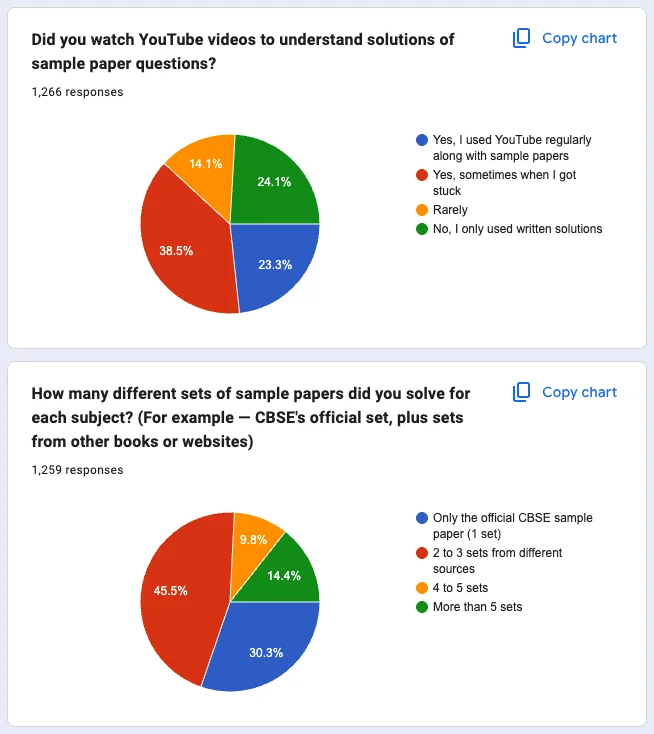
61.7% of Students Use YouTube Alongside Sample Papers
The survey examined whether students supplement written sample paper practice with YouTube video solutions, revealing that digital video has become deeply embedded in Class 12 exam preparation.
|
Did students use YouTube to understand sample paper solutions? (n=1,255) |
|||||||||||||||||||||
|
Yes, sometimes when stuck |
|
|
|
|
|
|
|
|
|
|
|
|
|
|
|
|
|
|
|
|
38.5% |
|
No, only written solutions |
|
|
|
|
|
|
|
|
|
|
|
|
|
|
|
|
|
|
|
|
24.2% |
|
Yes, regularly alongside papers |
|
|
|
|
|
|
|
|
|
|
|
|
|
|
|
|
|
|
|
|
23.2% |
|
Rarely |
|
|
|
|
|
|
|
|
|
|
|
|
|
|
|
|
|
|
|
|
14.1% |
|
Nearly 62% of students turn to YouTube for help understanding sample paper solutions. This signals that written answer keys alone are often insufficient: students need explanation, not just answers. SelfStudys Research, 2026 |
FINDING 09: SAMPLE PAPER VS. REAL EXAM
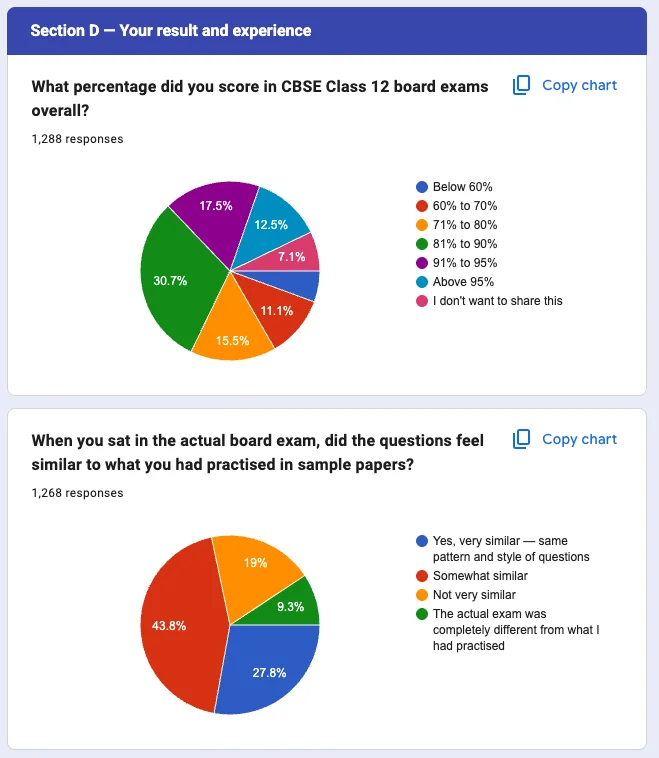
Only 27.8% Found the Board Exam 'Very Similar' to Sample Papers, But 71% Found at Least Some Similarity
|
Similarity |
% of Students |
Difficulty vs. Real Exam |
% of Students |
|
Somewhat similar |
44.0% |
Sample paper harder |
32.4% |
|
Very similar |
27.8% |
About the same level |
29.6% |
|
Not very similar |
19.1% |
Sample paper easier |
25.7% |
|
Completely different |
9.2% |
Completely different |
12.3% |
A majority of students (71.8%) found at least some similarity between their sample paper practice and the actual board exam, validating the core premise of sample paper preparation. However, 9.2% found the exam completely different from what they had practised.
On difficulty: 32.4% found sample papers harder than the real exam, suggesting that CBSE's official sample papers may be intentionally calibrated at a higher difficulty level, functioning as a stretch-standard. Students who find sample papers difficult and persevere through them may be better prepared than they realise when they enter the actual examination hall.
FINDING 10: THE BIGGEST MISTAKES (IN STUDENTS' OWN WORDS)
Students' Most-Cited Regrets: Starting Too Late, Skipping Hard Questions, and Never Checking Answers Properly
The survey's open-ended question, asking students to name their single biggest mistake in using sample papers, produced 789 responses. Thematic analysis reveals three dominant categories of regret, each with clear and actionable implications.
|
MISTAKE #1 Starting Too Late 19.4% of open responses Nearly 1 in 5 students who answered this question cited timing as their primary regret. The pattern is consistent across streams and states: students know early preparation matters, but most act on it too late. |
|
MISTAKE #2 Skipping Difficult Questions 13.7% of open responses Students admitted to avoiding hard or unfamiliar questions during practice, undermining the very purpose of sample papers: to surface and address weak areas before the real exam. |
|
MISTAKE #3 Not Checking Answers Properly 13.2% of open responses Many students solved papers without carefully reviewing their answers against the marking scheme, a mistake that leaves errors uncorrected and prevents students from understanding how marks are actually distributed. |
|
“ I used to skip the parts which were difficult. I now realise I should have faced them head on. PCM STUDENT, 2026 BOARDS |
“ I didn't use a timer. I would just solve questions casually without tracking time. In the actual exam, I ran out of time. PCB STUDENT, 2026 BOARDS |
“ For Physics, if I couldn't understand the marking scheme I would just leave it. I never learned how to write answers the way examiners want. SCIENCE STUDENT, 2025 BOARDS |
FOR STUDENTS
What the Data Tells Class 12 Students to Do Differently
Based on the patterns identified across 1,384 student responses, these evidence-backed recommendations offer a clear roadmap for Class 12 students preparing for CBSE board exams.
|
1 |
Start in October at the Latest, Not January Students who started before July or in October-November had significantly stronger score distributions. The data consistently shows that last-minute starters (January-February) are the most likely to score below 70%. Begin solving papers when your CBSE Class 12 syllabus is 60-70% complete, and use errors as a study guide for what to revise next. |
|
2 |
Aim for at Least 10 Full Papers per Subject The score jump between students who solved 6-10 papers and those who solved 15+ is among the most striking findings in this report. The top-performing group (above 95%) includes 30% of students who solved more than 15 papers. Volume matters, particularly when combined with consistent review. |
|
3 |
Always Solve Under Real Exam Conditions Close the phone. Set a 3-hour timer. Sit in a quiet room. Students who always applied these conditions were nearly twice as likely to see major score improvements versus those who never did. The goal is not just to answer questions; it is to train your brain to perform under the same pressures as the actual exam hall. |
|
4 |
Check Against the CBSE Marking Scheme, Not Just the Answer Key 53.8% of students check incorrectly or not at all. The CBSE marking scheme specifies how many marks each answer component earns, which is often different from simply being right or wrong. Understanding this difference is how you learn to write for the examiner, not just for yourself. |
|
5 |
Never Skip Hard Questions in Practice The second most common regret (13.7%) is avoiding difficult questions during practice. The exam will not let you skip them. Use sample papers specifically to identify and solve your weak areas. |
|
6 |
Supplement with Step-by-Step Solutions, Not Just Answer Keys 61.7% of students turn to YouTube when they get stuck, because answer keys alone do not explain reasoning. Choose resources that provide detailed, step-by-step solutions alongside the marking scheme so you understand not just what the answer is, but how to arrive at it and how it earns marks. |
METHODOLOGY
About This Research
|
SURVEY DESIGN AND DATA COLLECTION This report is based on an original survey titled "Your experience can help thousands of Class 12 students," designed and distributed by SelfStudys.com. The survey was distributed digitally to CBSE Class 12 students and recent board exam graduates across India through SelfStudys.com's platform and community channels. SAMPLE AND SCOPE Total valid responses: 1,384. The primary cohort is CBSE Class 12 students who appeared for board exams in 2026 (62.6% of responses), supplemented by 2025 (13.4%), 2024 (4.8%), and earlier cohorts. Respondents span 28+ Indian states. Stream distribution: Science PCM (37.2%), Science PCB (37.0%), Commerce (9.5%), Humanities (4.5%), and mixed/other (11.8%). LIMITATIONS This survey is self-reported and voluntary, which may introduce selection bias. Correlation findings do not establish causation. Score data is self-reported and not verified against official CBSE records. CITATION SelfStudys Research (2026). How India's Class 12 Students Actually Use Sample Papers: A Survey of 1,384 CBSE Students. SelfStudys.com. Available at: selfstudys.com/research/cbse-class-12-sample-paper-study-2026 SURVEY FORM LINK The original survey form used to collect these responses is publicly accessible. Readers can view the survey questions and, if they are a current or recent CBSE Class 12 student, contribute their own experience to this ongoing dataset: forms.gle/3qBBQDR5ojuLsmRR8 |
|
Research Division | All data original and proprietary | Survey conducted June 2026 | For republication or citation requests, contact SelfStudys.com directly. |
SURVEY EVIDENCE
Google Forms: Live Survey Response Summary
The findings and analysis throughout this report are based on 1,384 verified responses collected as of June 2026, which formed the dataset at the time this report was compiled and reviewed.
The Google Forms response summary screenshots embedded below reflect the live form as of July 2026, by which point the survey had received 1,400 responses. The 16 additional responses received after the report cutoff date are not reflected in any of the statistics, charts, or findings published in this document.


 Home
Home
 Quiz
Quiz
 Short News
 Web Story
 Get latest Exam Updates