

 Sign in


 Profile
 Signout


FREE PDF Download
-
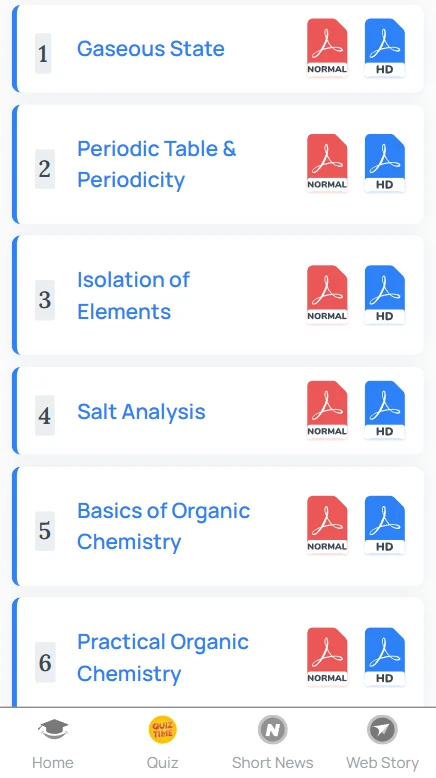
1Gaseous State


-
2Periodic Table & Periodicity
-
3Isolation of Elements
-
4Salt Analysis
-
5Basics of Organic Chemistry
-
6Practical Organic Chemistry
-
7Some Basic Concepts of Chemistry
-
8Structure of Atom
-
9Classification of Elements & Periodicity of Properties
-
10Chemical Bonding and Molecular Structure
-
11States of Matter
-
12Thermodynamics
-
13Equilibrium
-
14Redox Reactions
-
15Hydrogen
-
16The s-Block Elements
-
17p-Block Elements
-
18Organic Chemistry - Some Basic Principles & Techniques
-
19Hydrocarbons
-
20Solid State
-
21Solutions
-
22Electrochemistry
-
23Chemical Kinetics and Nuclear Chemistry
-
24Surface Chemistry
-
25General Principles & Process of Isolation of Elements
-
26The p-Block Elements (Group 15,16,17,18)
-
27The d- & f-Block Elements
-
28Coordination Compounds
-
29Haloalkanes & Haloarenes
-
30Alcohols Phenols and Ethers
-
31Aldehydes, Ketones & Carboxylic Acids
-
32Amines
-
33Biomolecules
-
34Polymers
-
35Chemistry In Every Day Life
-
36Atomic Structure
-
37Chemical Thermodynamics
-
38Chemical Equilibrium
-
39Ionic Equilibrium
-
40Some Basic Principles of Organic Chemistry
-
41Isomerism in Organic Compounds
-
42Chemical Kinetics
-
43Nuclear Chemistry
-
44Principles & Processes of Isolation of Elements
-
45Organic Compounds Containing Halogens
-
46Organic Compounds Containing Nitrogen
-
47Principles Related to Physical Chemistry

Chemistry in JEE Advanced can seem to be difficult for some students as it can include tricky and complex questions. To prepare well for it, students can refer to the JEE Advanced Chemistry chapter wise previous year questions and start practising; regular practice can help them to improve their overall understanding of the subject.
In recent years, this section of JEE Advanced has required students to go beyond memorising reactions and formulas. Now, the questions assess conceptual clarity, application of concepts, and a deeper understanding of topics across Physical, Organic, and Inorganic Chemistry. In JEE Advanced 2026, many students and experts described the Chemistry paper as concept-oriented. The questions required careful interpretation and strong fundamentals rather than direct recall. As a result, practising previous years' questions becomes important for students to understand the type of concepts tested, analyse question patterns, as well as develop the approach needed to solve problems effectively. Students can also use a JEE Advance Mock Test to strengthen their preparation and practise applying concepts under exam-like conditions.
This resource provides a collection of all levels of questions under one roof; accordingly, students can easily attempt the difficult questions in the actual exam. Through this, students can perform well in the exam and can get into a good engineering college such as IITs and NITs.
JEE Advanced Chemistry Chapter Wise PYQs PDF
Students can access the PDF from the Selfstudys website without paying any kind of amount. After solving questions from the portable document format, students can also refer to the solutions as well as clear doubts then and there. Here are the links to access any of the chapter-wise question PDFs from SelfStudys.
The solutions of the JEE Advanced Chemistry chapter wise PYQs are prepared by our subject matter experts with proper research. Students who refer to the solutions can get a brief idea about the way to attempt all questions without making any kind of silly mistakes.
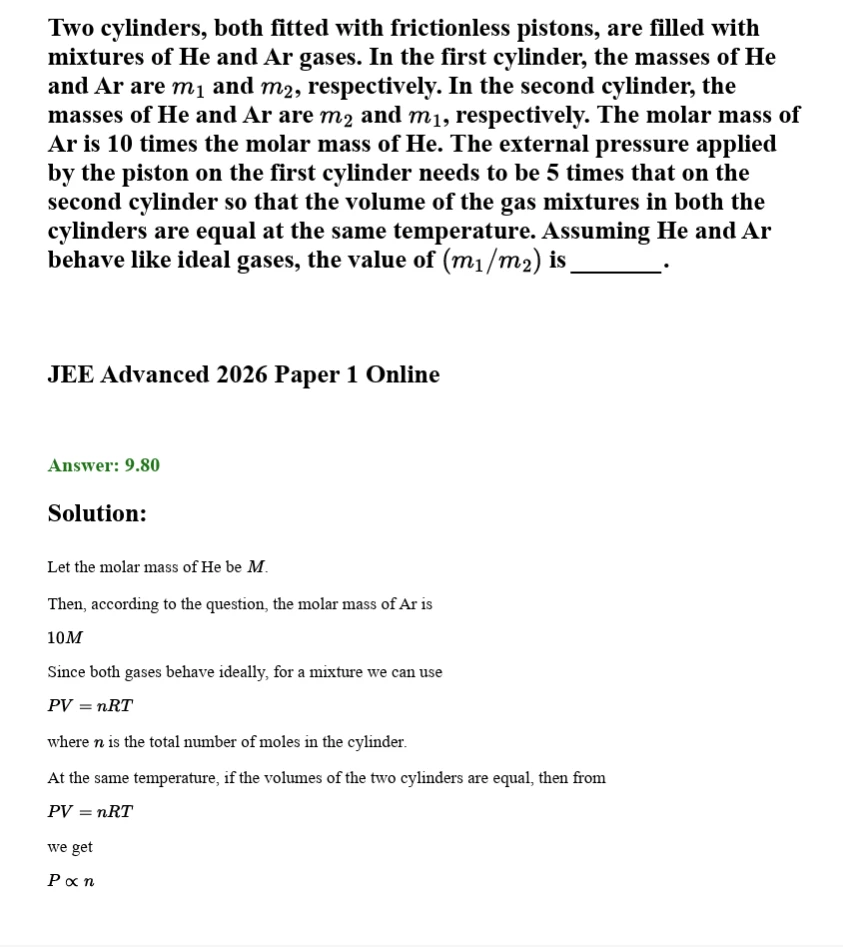
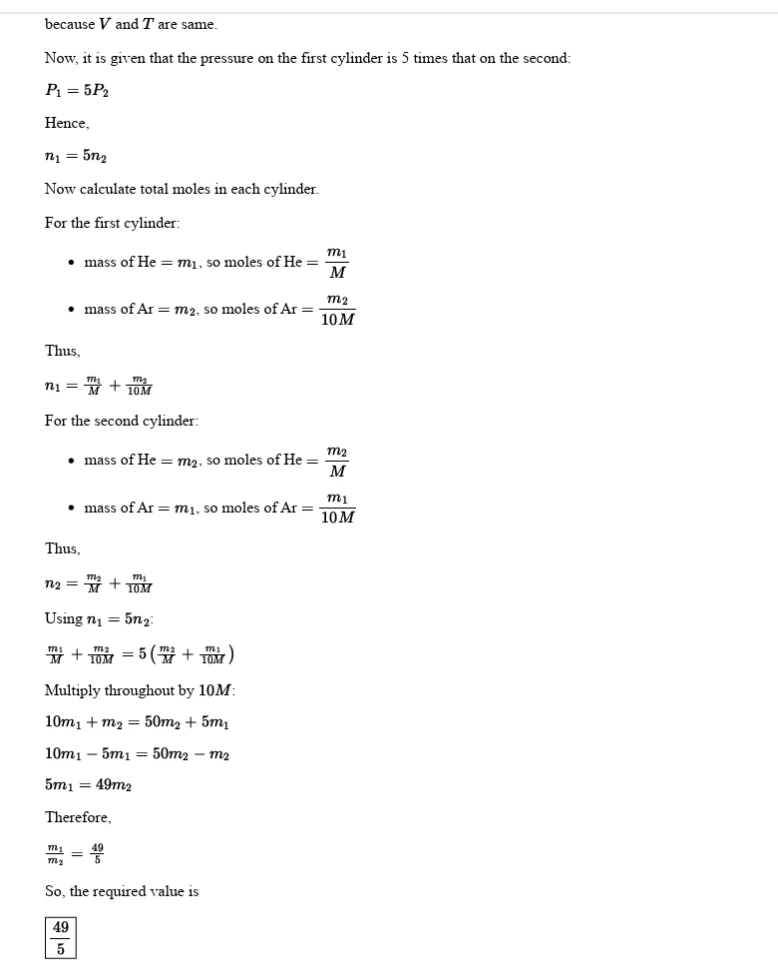
How to Attempt JEE Advanced Chemistry Chapter Wise PYQs?
To attempt these questions, students need to follow the given steps:
- Visit the SelfStudys website.
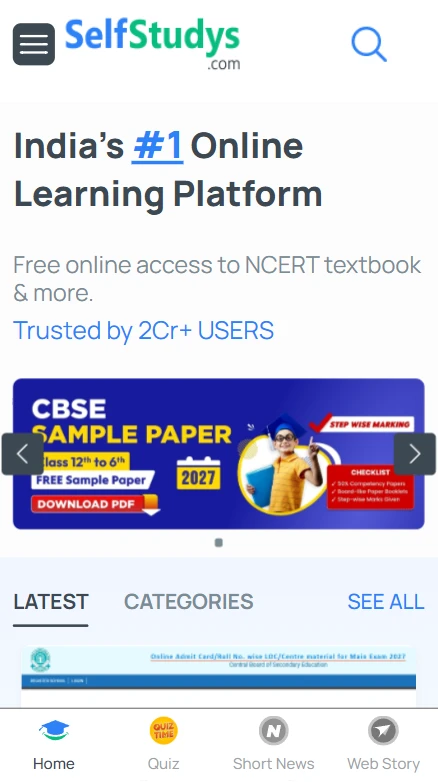
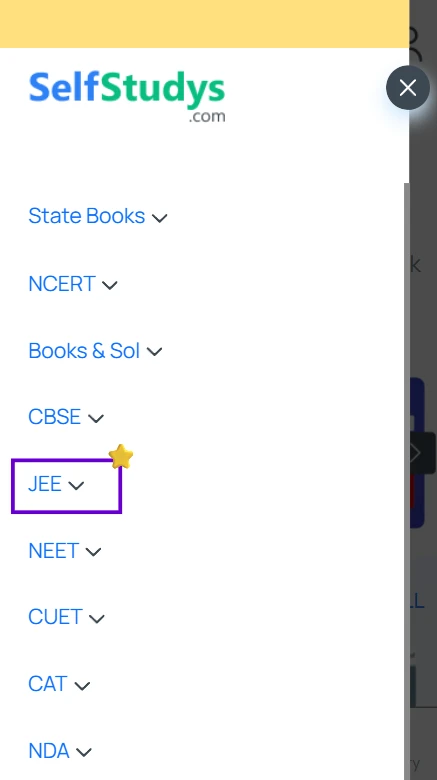
- Click the arrow next to JEE, which can be seen in the navigation bar.
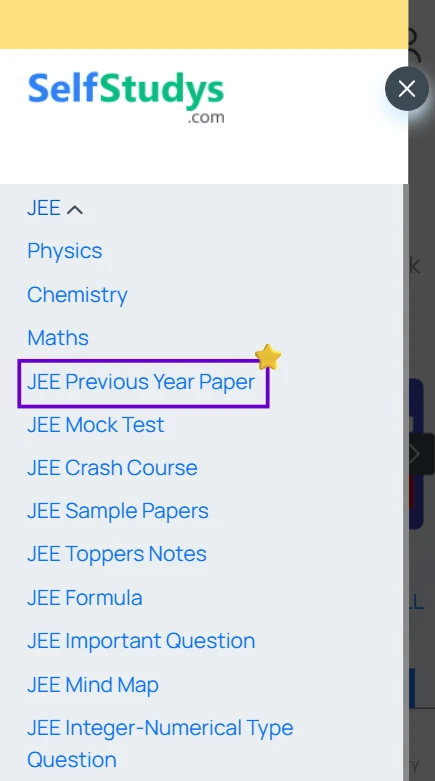
- A drop-down will appear; select JEE Main Previous Year Paper from the list.
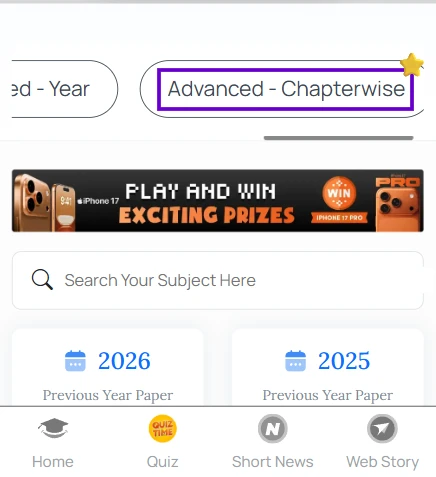
- A new page will appear; select JEE Advanced-Chapterwise PYQ from the given list.
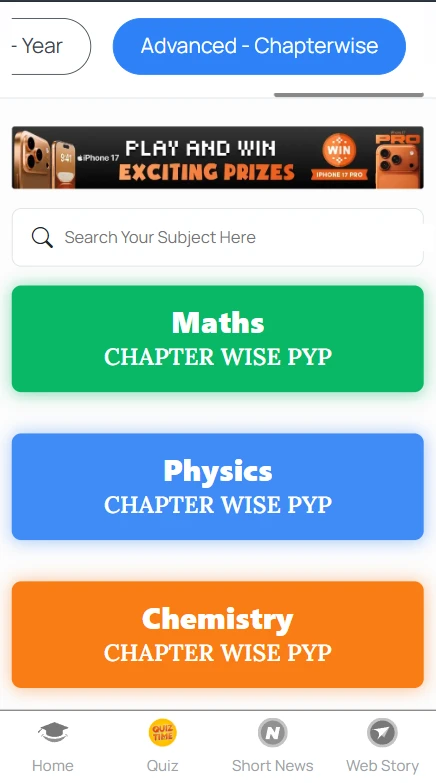
- Again, a new page will appear, where you need to select the subject to access the JEE Advanced Chemistry chapter wise PYQs PDF.
Features of JEE Advanced Chemistry Previous Year Questions Chapter Wise
This subject is considered to be an important one in the entrance exam; to be well prepared for the entrance exam, students need to practise questions. Some of the features of this resource are discussed below:
All the Chapters are Covered: In the PDF, the toughest questions from all chapters are covered so that students can build a strong foundation in each and every lesson.
Different Years of Questions are Included: Different years of questions are included so that students can get to know about the types asked in different years and prepare accordingly.
Hints and Solutions are Given: Hints and solutions for each question are discussed so that students can refer to them whenever they feel confused or stuck.
Available in the PDF: The JEE Advanced Chemistry previous year questions chapter wise are available in the PDF so that students can access them from anywhere without the internet. Students can also refer to a JEE Advance Sample Paper for additional practice.
Free of Cost: If students want to access the PDF without paying any amount, then they can do so by referring to the SelfStudys website.
Diagrams are Given: In the PDF, diagrams are given for some questions so that students can understand any particular question in a proper way.
Examples Of JEE Advanced Chemistry Chapter Wise Questions With Solutions
Questions in JEE Advanced often require more than direct formula application. They test whether students can connect concepts and apply them properly. Our chapter-wise PYQ collection includes detailed solutions that explain the approach required to solve such problems. Here are a few examples of them.
Example 1: Chemical Bonding
Question: Which of the following statements about chemical bonding are correct?
Options:
- A. A molecule with polar bonds can never be non-polar.
- B. The shape of a molecule affects its overall polarity.
- C. Lone pairs on the central atom can influence the geometry of a molecule.
- D. Bond length generally decreases as bond order increases.
ANSWER:
Correct Options: B, C, and D
Solution:
- Option A: Incorrect
The presence of polar bonds does not always make a molecule polar. If the arrangement of bonds is symmetrical, the dipole moments can cancel each other, making the molecule non-polar.
- Option B: Correct
The overall polarity of a molecule depends not only on individual bond polarities but also on the arrangement of those bonds in space.
- Option C: Correct
Lone pairs occupy space around the central atom and create repulsion, which can change the shape and bond angles of a molecule.
- Option D: Correct
Higher bond order indicates stronger bonding between atoms, which generally results in shorter bond length.
Hence, the correct options are: B, C, and D
Concept Tested: Molecular polarity, VSEPR theory, bond parameters, and chemical bonding concepts.
Example 2: Organic Chemistry
Question: Which of the following statements about organic reaction mechanisms are correct?
Options:
- A. The stability of an intermediate can influence the pathway of an organic reaction.
- B. A catalyst changes the equilibrium position of a reversible reaction.
- C. Electron movement in organic reactions is represented using curved arrow notation.
- D. The reaction mechanism explains the step-by-step process through which reactants are converted into products.
ANSWER:
Correct Options: A, C, and D
Solution:
- Option A: Correct
The stability of reaction intermediates, such as carbocations or free radicals, affects the preferred pathway of many organic reactions.
- Option B: Incorrect
A catalyst changes the rate at which equilibrium is reached but does not change the equilibrium position of a reversible reaction.
- Option C: Correct
Curved arrows are used in organic chemistry to represent the movement of electrons during bond breaking and bond formation.
- Option D: Correct
A reaction mechanism describes the individual steps involved in converting reactants into products and helps explain how a reaction occurs.
Hence, the correct options are: A, C, and D
Concept Tested: Organic reaction mechanisms, intermediates, catalysts, and electron movement.
Why Are Chemistry Chapter Wise PYQs for JEE Advanced Important?
It is highly recommended that students solve the JEE Advanced Chemistry chapter wise questions with solutions, as it provides many benefits; those benefits are discussed below:
Can Get the Knowledge About the Difficulty Level: By practising these questions on a regular basis, students can get an idea about the level of the actual exam paper.
Can Understand the Pattern of the Paper: The paper pattern is considered to be the question format. It is very important for students to understand the paper pattern, which is possible only by practising the chapter-wise past questions.
Helps to Improve the Speed: It is very important for students to have good speed while attempting the exam. For that purpose, students can start practising questions from the PDFs that are available on the SelfStudys website.
Can Find Their Weak Areas: Practising the Chemistry chapter wise PYQs for JEE Advanced can help students identify their weak concepts or areas accordingly and work on them.
Develops Problem-Solving Skills: Solving these questions can help students to develop their problem-solving skills: the ability to identify the problems and attempting properly.
Can Maintain their Accuracy: Accuracy is the fact of being right; students can easily maintain their accuracy in the exam after practising the questions.
How to Ace JEE Adv Chemistry Chapter Wise Previous Year Papers?
To ace JEE Adv Chemistry chapter wise previous year papers, students need to take care of many things, which are discussed below:
Go Through the Understanding of the Concepts: It is essential for students to have a proper understanding of the concepts included in this subject and review the concepts so that they can score well.
Practise Questions: Students are advised to practise a variety of questions related to the concepts included in the Chemistry syllabus so that they can ace the exam.
Focus on Accuracy: Maintaining accuracy in JEE Advanced Chemistry chapter wise previous year questions PDF download is very essential for students. To do so, students need to first read the question carefully as well as understand what is being asked.
Manage Time Efficiently: While attempting the questions, students need to complete them within the time limit to improve speed and accuracy.
Seek Help: If students are struggling to attempt any questions, then it is better to seek help from the teachers and fellow students.
Revise Regularly: To perform well in these questions, students are advised to revise all the concepts and keep them fresh in mind.
A Comprehensive Guide to Solve JEE Advanced Chemistry Chapter Wise Previous Year Questions PDF Download
Before solving the JEE Advanced Chemistry chapter wise previous year questions, students need to first follow the guidelines, which are discussed below:
Read the Question Carefully: Students need to read the questions in the PDF so that they can understand what is being asked and what is required to attempt it.
Identify the Concept: Identify the appropriate concept to solve the question; in this step, students need to recall the concepts that they have learnt earlier.
Apply the Concept: Now apply the appropriate concept while attempting JEE Advanced Chemistry chapter wise PYQs so that one can score better.
Analyse the Mistakes: Analyse the mistakes after attempting the questions so that one can identify the weak areas and work accordingly.
Stay Motivated: While attempting the problems, students need to be very motivated and surround themselves with supportive people.
Use Alternative Methods: Students are advised to use alternative methods if they are stuck on any of the questions included in the JEE Advanced Chemistry chapter wise PYQs PDF so that they don’t take much time on a single question.
JEE Advanced Chemistry Chapter Wise PYQs Trend Analysis
The table below shows which chapters carried the most weight in each year's JEE Advanced Chemistry questions, along with the question formats and difficulty level.
|
Year (Conducting IIT) |
Chapters with Most Questions |
Questions Formats Seen |
Difficulty and Trend |
|
2026- IIT Roorkee |
Named reactions, Amines, Polymers, Biomolecules, p-Block, Coordination Compounds, Chemical Kinetics |
P1: single, multi, numerical, match-list. P2: adds paragraph-based questions |
Most scoring subject in both papers |
|
2025- IIT Kanpur |
Organic Chemistry, Coordination Compounds, Chemical Kinetics, Atomic Structure |
Single-correct, multi-correct, numerical, match-list |
Easiest of the three subjects |
|
2024- IIT Madras |
Organic Chemistry, p-Block, Electrochemistry, Thermodynamics |
Single-correct, multi-correct, numerical, match-list |
Moderate; many NCERT-based Inorganic questions |
|
2023- IIT Guwahati |
Organic Chemistry, Coordination Compounds, Chemical Bonding, Chemical Kinetics |
Single-correct, multi-correct, numerical, match-list |
Moderate to difficult |
|
2022- IIT Bombay |
Organic reaction mechanisms, p-Block, Thermodynamics, Coordination Compounds |
Single-correct, multi-correct, numerical, match-list |
Moderate but lengthy; Organic weightage higher in Paper 2 |
|
2021- IIT Kharagpur |
GOC, Coordination Compounds, Chemical Kinetics, Electrochemistry |
Single-correct, multi-correct, numerical, paragraph-based numerical |
Moderate; Physical Chemistry numericals prominent |
When Is the Best Time To Solve JEE Advanced Chemistry Chapter Wise Previous Year Questions?
The best time to solve JEE Advanced Chemistry previous year questions chapter wise generally depends on the student’s preference and learning style; some of them are discussed below:
After completing the Chapter: Students can prefer solving the questions after completing each chapter, as these are arranged in a chapter-wise manner.
To Understand the Concepts Better: Students can start solving the questions in case of understanding the concepts, as these questions cover each and every concept.
While Completing the Chapter: In the process of completing the chapter included in the syllabus, students can prefer JEE Advanced Chemistry chapter wise questions with solutions so that they can practise them simultaneously.
To Solve Confusions: If students are confused in understanding any of the Chemistry concepts, then they can prefer solving these questions and improve their understanding level.
To Improve Confidence Level: Confidence is considered to be the state of strong feeling while attempting questions; this can only be improved by practising the PYQs on a regular basis.
After Completing the Whole Syllabus: Once the syllabus is completed, it is very important for students to practise questions and improve their overall performance.
What Challenges Can Be Faced While Solving JEE Advanced Chemistry Chapter Wise PYQs PDF?
Solving Chemistry chapter wise PYQs for JEE Advanced can be challenging due to several factors, which are discussed below:
Complex Questions: The questions may include complex problems that require a deep understanding of the concepts. For these questions, students may find it difficult to identify the right approach to solve the problems; otherwise, they may get struck.
Time Pressure: The Chemistry questions are time-bound, and students need to solve a large number of questions within the given time limit. This can create a lot of pressure on students and make it difficult to solve the problems.
Lack of Practice: Lack of practice is one of the significant challenges that students may face while solving JEE Adv Chemistry chapter wise previous year papers, as without regular practice students may find it difficult to apply the concept.
Difficulty in Visualising the Concept: Some questions might need to visualise the concepts so that they can be applied accordingly, but some students may face difficulty in visualising the concepts.
Silly Mistakes: Silly mistakes like misreading the questions can significantly impact the student’s performance. In this case, students need to be very careful while reading the question.
Note: Focus on understanding the concepts included in the Chemistry questions rather than just memorising them; this will help students to solve them effectively.
How To Rectify The Mistakes After Solving JEE Advanced Chemistry Previous Year Questions Chapter Wise?
Rectification of mistakes is the most important phase after solving JEE Advanced Chemistry chapter wise previous year questions PDF download so that students can improve their preparation process.
Analyse the Mistakes: After solving each set of questions, students need to go through the solutions and need to analyse the mistakes: conceptual understanding of the syllabus, misreading of the question, etc.
Identify the Root Cause of Mistakes: Once you have identified the mistakes, it is better to understand the root cause of those mistakes.
Revise the Concepts: If students have made mistakes in a particular concept while attempting the questions, then it is better to revise the particular concept.
Practise Similar Problems: Once students get to know about the mistakes made while solving the JEE Advanced Chemistry chapter wise previous year questions, it is important to practise similar sets of problems to avoid the same kind of mistakes in future.
Keep a Record of the Mistakes: Students are advised to keep a proper record of mistakes made and solutions used to rectify the mistakes.
Take a Break: Taking a break while solving questions can avoid plenty of unnecessary mistakes, as after taking a break, the mind feels refreshed.
Conclusion
Chemistry subject in the JEE Advanced exam is not just about learning the formulas. Students also need to understand how concepts are connected as well as applied in unfamiliar situations. The collection of JEE Advanced Chemistry chapter wise PYQs helps them to study in the same way as the exam tests. Students can revise the actual problems, find recurring concepts, and learn different approaches to solve the challenging questions.
The benefits of solving this resource are: you can get the knowledge about the difficulty level, it helps to improve speed, can find weak areas, and many more.
To score well in IIT JEE Advanced Chemistry, students can follow the given steps, those are: go through the understanding of the concept, practise questions, manage time efficiently, revise regularly, and many more.
It is important to manage time efficiently to attempt chapter-wise questions so that students can improve their speed as well as accuracy for the exam.
Difficulties faced while solving JEE Advanced Chemistry chapter wise PYQs PDF are: time pressure, complex questions, lack of practice, silly mistakes, and many more.
Important things included in the PDF are: all chapters are covered, hints and solutions are given, available for free, and much more.
Students can attempt the questions from the Selfstudys website; steps to attempt are discussed on this page.


 Home
 Quiz
 Short News
 Web Story
 Get latest Exam Updates