


 Sign in


 Profile
 Signout
NCERT Textbooks to Include Startups and Entrepreneurship: Check Key Changes
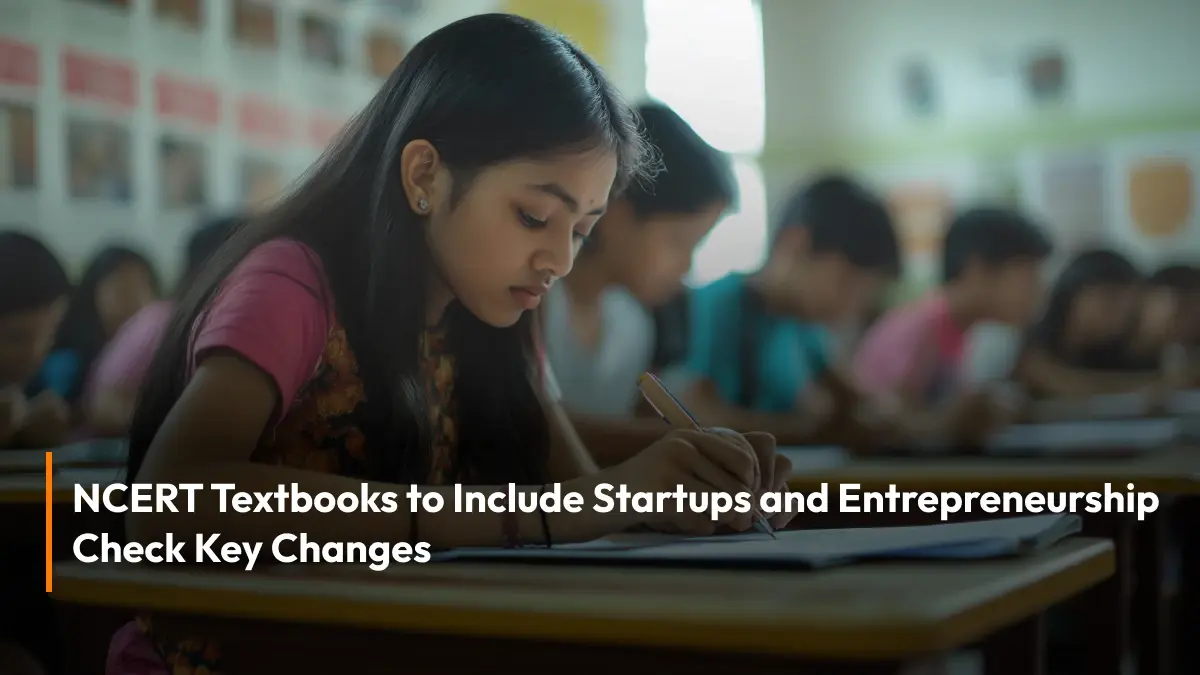


NCERT has introduced a new Social Science textbook that includes a dedicated chapter on startups and entrepreneurship. The chapter introduces students to the basics of starting and managing a business.
Students will learn how to identify business opportunities, understand market activities and prepare a practical business plan. The chapter aims to help students understand how businesses are created and how entrepreneurship contributes to society and the economy.
What the NCERT Entrepreneurship Chapter Teaches
Three major questions form the foundation of the chapter. The first one is about the influence of entrepreneurship on society and economy. The second one revolves around the various functional areas of a business. The last one is about how to create a business plan.
All these topics provide students a basic knowledge about how a business functions and how an idea can be made into a venture.
Additionally, the textbook also integrates the lessons on entrepreneurship in the context of Indian Startup environment. As per the chapter, there were around 350-400 startups in India about a decade back. Now, the number has increased to almost 2.3 lakh companies, making India rank third in the world.
The chapter also mentions that emphasis is placed on creating platforms that integrate research, industry, startups, and entrepreneurship.
There are other aspects of a business that are covered in the chapter. They involve gaining insights about market activities, spotting opportunities, analyzing performance, and strategic planning before investment.
Moreover, the textbook also discusses how artificial intelligence (AI) can help the business through market analysis and decision making.
Indian Entrepreneurs Featured in the NCERT Textbook
To make the topic easy to comprehend, the book has given examples taken from the stories of Indian entrepreneurs.
One such entrepreneur is Mohan Singh Oberoi, born in Punjab in 1898. His first job was at a salary of Rs 50. He later mortgaged his wife's jewellery to buy his first hotel. He ultimately made a name for himself in the hospitality business in India.
Another such story is that of Lijjat Papad, which was founded by seven homemakers in a chawl of Mumbai. They used borrowed raw materials and an age-old recipe to manufacture papads.
The women would carry the dough home in the morning and manufacture the papads amidst their household chores, returning the final product in the evening.
This example highlights how a simple home industry has evolved into a renowned brand through quality and determination.
Using the examples in this way, the NCERT book acquaints students with different elements of entrepreneurship.
-------
CBSE Class 9 Study Materials
| CBSE Class 9 Study Materials | |
| NCERT Books for Class 9 | NCERT Solutions For Class 9 |
| CBSE Syllabus Class 9 | CBSE Sample Papers for Class 9 |



 Home
Home
 Quiz
Quiz
 Short News
 Web Story
 Get latest Exam Updates